
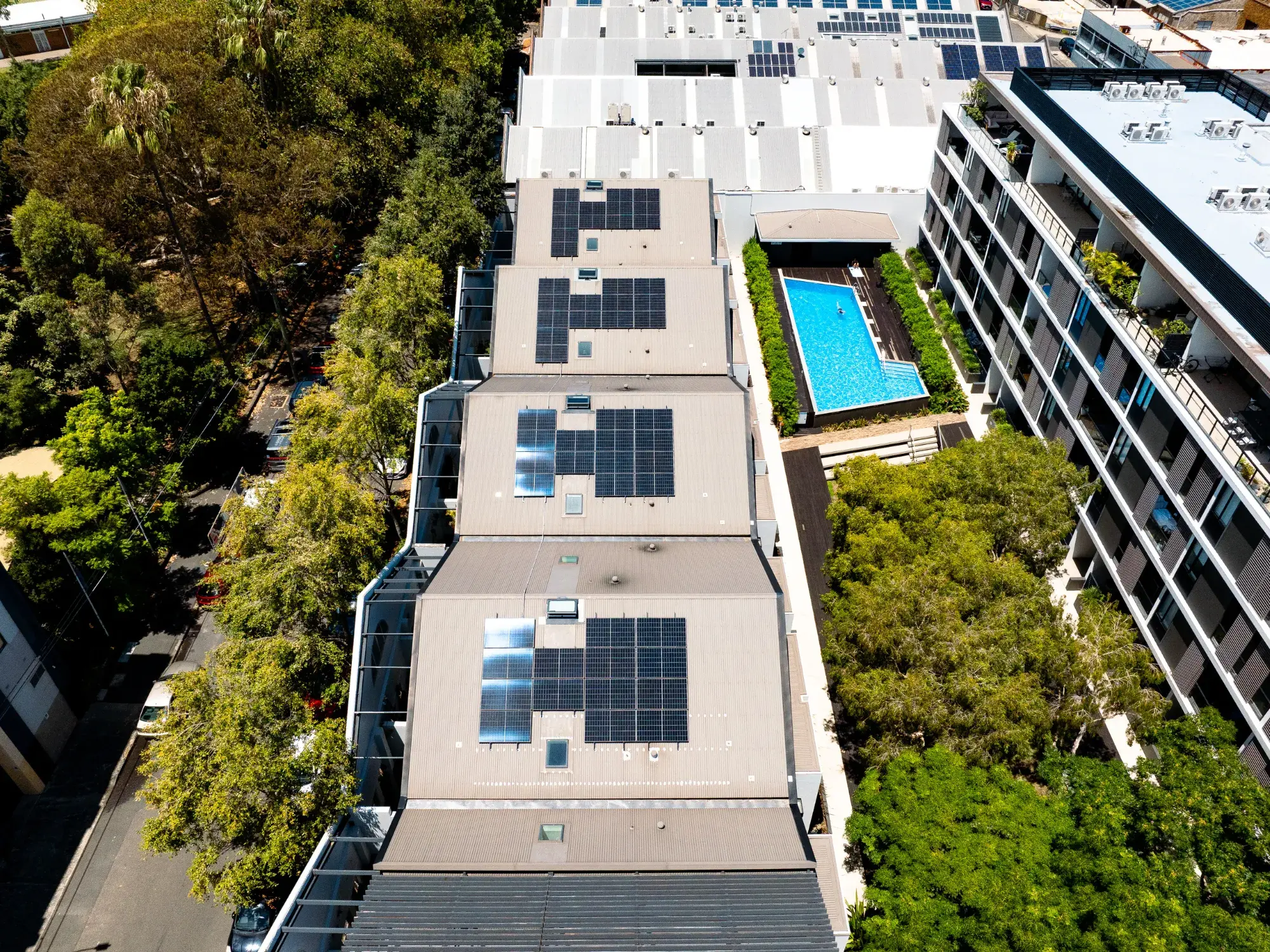
Australia really needs to help more renters access the benefits of rooftop solar and implement policies and ideas needed for everyone to enjoy what is now “the cheapest energy in all of history.” (1) While more than a third of Australian households are enjoying the savings of rooftop solar panels, 30% of Australians who rent have largely been left out.
At the heart of this issue is the “split incentive” dilemma, where landlords are responsible for paying for property upgrades, but they have zero financial motivation to do so because the tenants pay the energy bills. Advocacy groups like Rewiring Australia have championed this cause for years, stating that “renters deserve the benefits of electrification,” and have pushed for policy changes that ensure clean energy isn’t just a privilege for homeowners. (2)
The good news is, the landscape is shifting rapidly. Renters can tap into the sun right now, with plenty of emerging technology and ideas breaking through or just around the corner.
Apartment Tech: Shared Rooftop Solar
Living in a multi-story apartment block historically meant the roof space was exclusively used to power common property lighting or elevators. Not anymore.
- Hardware-Driven Solar Sharing: Innovative companies (such as Australia’s Allume Energy with their “SolShare” technology) have created hardware that splits the energy generated from a single rooftop solar array and distributes it dynamically to individual apartments within the building. (3)
- Individual Cost Breakdown: The smart internal software automatically tracks how much solar energy each resident uses and calculates individual cost credits, integrating seamlessly with your standard electricity bill. This means apartment renters can enjoy the exact same direct bill reductions as standalone houses. (4)
This is hopefully setting the groundwork for everyone living in medium-density housing to fill as much of their roof with solar as possible and share it with residents, with the flexible option of adding batteries down the line.

Incentivising Landlords: Cracking the “Split Incentive”
Addressing the “split incentive” dilemma is key to getting panels onto rental properties at scale. It has to be a win-win. Here is how the market is sweetening the deal for property owners:
- Government Carrots: Programs like Solar Victoria are leading the way with targeted landlord rebates and interest-free loans, while federal tax frameworks allow landlords to claim depreciation and write-offs on energy upgrades. (5)
- The “Green Rent” Model: If a landlord uses a low-interest loan to install solar, the energy savings usually far outpace the repayments. If solar saves a tenant $150 a month, the landlord can raise the rent by $50 to cover the asset. The landlord gets an upgraded property, and the tenant is still $100 a month richer.
- Solar PPAs (Power Purchase Agreements): Companies are beginning to install solar on rentals at zero upfront cost to the landlord. The provider maintains the panels, and the tenant simply buys the generated solar power at a rate much cheaper than the standard grid. (6)
The Neighborhood Grid: Community Solar
If you don’t have a roof you can physically access for solar, there are emerging ways to leverage the power of the community to unlock clean energy.
- Solar Farm Stakes (Solar Sharing Programs): Solar sharing companies (like SunTenants or community solar cooperatives) allow you to purchase a “stake” or a specific number of panels in a large, off-site solar farm. The clean energy generated by your remote stake is credited directly against your home electricity bill. The best part? It moves with you whenever you change rental properties.
A great example of this is the pioneering Haystacks Solar Garden project which is really worth reading more about for anyone interested: https://cpagency.org.au/project/haystacks-solar-garden/


Almost ready to Go! Other Technologies are waiting on Government to pull their fingers out.
We have the technology to do a lot more, but governments are not moving quickly enough to clear the regulatory hurdles. We have technologies that are fully developed, ready to deploy, and are just waiting for policy to catch up to the engineering:
- Balcony Solar Systems: Popularised in Europe and rapidly growing globally, these consist of one or two lightweight solar panels that securely clip onto a balcony railing. They plug directly into a standard outdoor wall socket and feed electricity straight into your apartment’s grid to power your daytime appliances. When your lease is up, you simply unplug them and take them to your next home. (8)
- Virtual Peer-to-Peer (P2P) Trading: P2P solar platforms allow everyday people to trade energy. If your neighbour has a massive solar array producing excess power, P2P software allows them to sell that surplus electricity directly to you (often at a lower rate than the big energy retailers) via the existing grid framework. (9)
The Future: Policy Shifts & Mandates
The ultimate fix to the renter dilemma lies in systemic change. According to data published by the Institute for Energy Economics and Financial Analysis (IEEFA), implementing smart home upgrades could halve renter energy bills, accumulating a massive $107 billion in savings across Australia by 2050<¢0.1.1). (10)
To unlock this, states are progressively introducing Minimum Energy Efficiency Standards for rental properties.
- The ACT & Victoria have already led the charge with mandatory ceiling insulation rules and plans to phase out inefficient gas appliances. With Victoria Greens fighting for a mot more (11)
- New South Wales & Tasmania are actively reviewing these frameworks.
- Long-Term Financing for Landlords: Experts note that if governments offer landlords 15-year low or zero-interest loans to install solar and insulation, the ongoing energy bill savings will immediately outpace the cost of the loan from day one. This ensures that even if a landlord passes the upgrade cost onto the tenant via minor rent adjustments, the tenant still walks away with a net financial benefit.
The benefits of solar should be for everyone, not just for those who own a home. Through a mix of clever portable tech, community sharing networks, and upcoming legislative changes, every Australian should soon have the exact same opportunity to save money, slash their energy bills, and reduce emissions.
Leave a Reply