
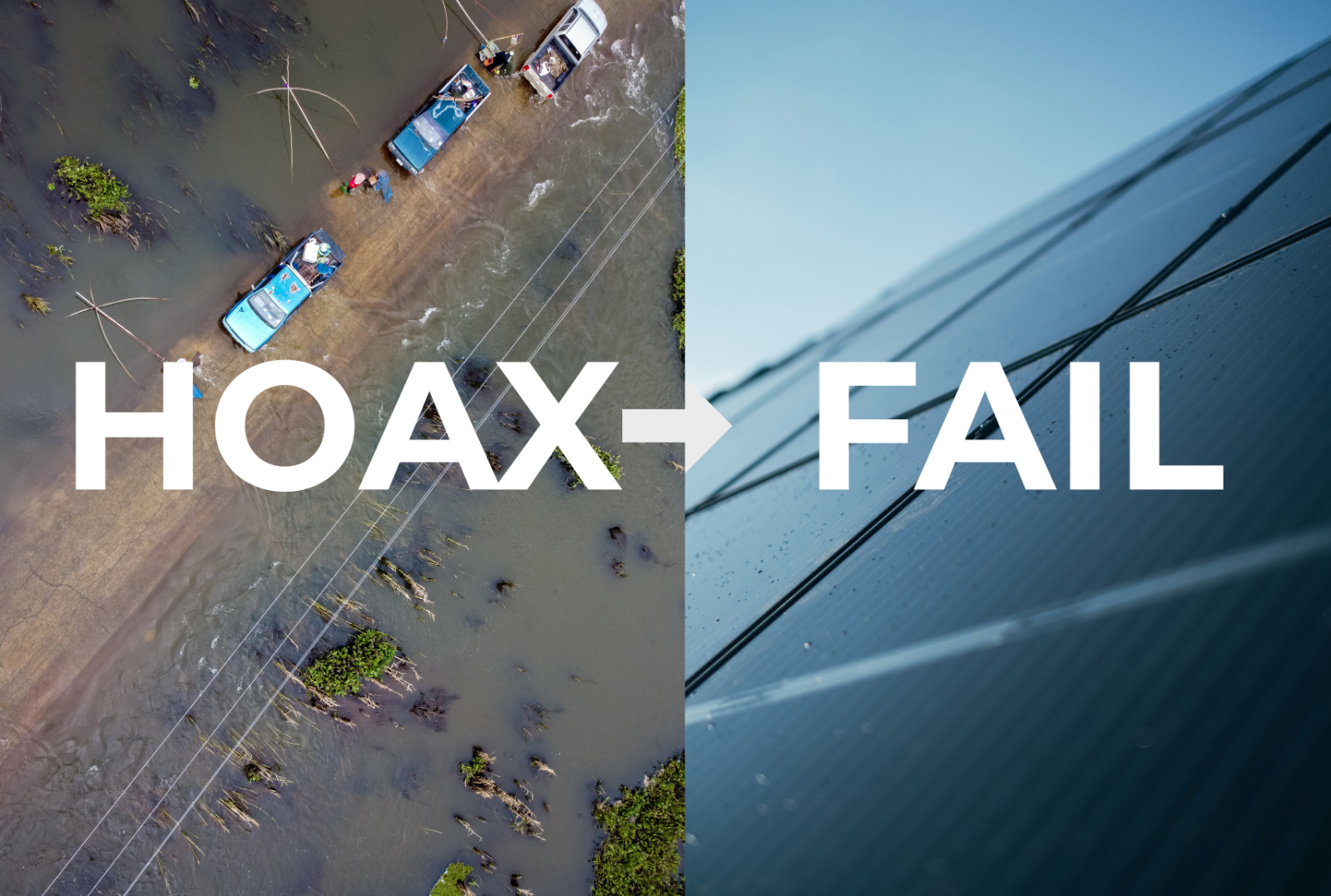
The playbook of outright denying that the Earth is warming has mostly become obsolete in Australia in 2026. As global temperatures break records and severe weather events become more frequent, the public can see the crisis unfolding with their own eyes. Faced with a reality that is increasingly difficult to deny, opponents of climate action have quietly taken a tactical shift towards clean energy denial.
According to a major study by the Center for Countering Digital Hate, the rhetoric has evolved from “old denial” to “new denial.” Instead of arguing that climate change is a hoax, pro fossil fuels networks are now focused on attacking clean energy solutions, undermining the credibility of energy experts, and exaggerating the economic costs of transitioning away from fossil fuels.
The data highlights a stark transition. Researchers tracked thousands of hours of video transcripts on major digital platforms. They discovered that arguments rejecting human-caused global warming dropped significantly, while narratives seeking to discredit climate solutions surged to comprise 70% of all climate denial claims. This major pivot allows misinformation to bypass the most basic moderation policies set by tech platforms, which sometimes restrict outright scientific falsehoods but permit debates on public policy.
This really should surprise nobody because the clear aim of climate change denial was always to protect the fossil fuels industry and that is of course why they funded climate change denial for decades. The Climate Deception Dossiers

This new front in the climate “debate” manifests in several distinct ways.
First, there is a hyper-focus on the alleged failure of renewable energy technologies. Rather than debating the greenhouse effect, online campaigns target electric vehicles, heat pumps, and wind turbines. These narratives frequently weaponise viral, unverified claims about blackouts, grid instability, environmental impacts and costs to stoke anxiety among voters.
Second, opponents have embraced a softer form of obstruction known as climate inactivism. Renowned climatologist Michael Mann has written extensively on this phenomenon for publications like Scientific American, noting that the strategy shifts the burden of responsibility from major corporate polluters to individual lifestyle choices. By fostering internal divisions or promoting a sense of “doomism” – the belief that it is already too late to act – these campaigns achieve the same ultimate goal as traditional denial: stalling climate action.
Finally, the focus of lobbying has shifted directly toward political and bureaucratic delay. A comprehensive review published by the International Panel on the Information Environment revealed a coordinated effort by fossil fuel interests and right-wing political actors to target civil servants and policy framework negotiations. The objective is no longer to win the scientific debate, but to slow down regulations through death by a thousand bureaucratic cuts.
We see this delaying tactic in Australia right now in Queensland. The Crisafulli Government has scrapped legislated renewable energy targets, extended the lifespan of ageing coal-fired power stations past their original closure dates, and tightened planning rules for clean energy infrastructure to slow down clean energy projects.
Delay is the new denial.
This rhetoric and these actions are already leading to delays and cancellations. Clean energy advocates and industry leaders from the Smart Energy Council warn that the state’s rewritten strategy has intentionally made green projects uninvestable, starving new renewables of vital capital and driving green investment interstate. Major initiatives like the massive Pioneer Burdekin pumped hydro project have been axed, replaced instead by policy settings designed to lock Queenslanders into a fossil fuel reliance for decades to come.
It’s not just projects that are being affected either. The final report from the Senate Selet Committee on Information Integrity on Climate Change and Energy detailed how orchestrated anti-renewables campaigns are weaponising social media algorithms and generative AI to fracture regional communities. Testimony presented to the committee revealed that fear-mongering and fabricated narratives, ranging from baseless claims that community batteries will explode to false assertions that offshore wind farms kill whales, have been deliberately manufactured by PR firms, think tanks, and fossil fuel-aligned entities. According to submissions highlighted by the Clean Energy Council and regional advocates, this steady stream of deception has generated a toxic wave of hostility. Farmers and regional landowners who choose to host renewable energy infrastructure now face severe psychosocial harms including targeted doxing, vandalism and aggressive online harassment. By manufacturing outrage and stoking local paranoia, these deceptive scare campaigns successfully sabotage viable regional investments while weaponising local divisions to tear apart the social fabric of rural towns. www.abc.net.au/news/2026-03-29/senate-report-misinformation-climate-change-recommendations/106497978
For policymakers and advocacy groups, this shift represents a moving target. Combatting the new era of climate obstruction requires moving past basic scientific defence and actively proving the reliability, affordability, and economic benefits of a green transition.
The good news is the Clean Energy Denial Network doesn’t have a leg to stand on when it comes to economics anymore. All the evidence shows Renewables are the cheapest way to power nations, so they have to lie, twist the truth, spread FUD (Fear Uncertainty and Doubt) and use disingenuous debating tactics instead of facts. This however can only get them so far before reality comes crashing in.
Data released by the International Renewable Energy Agency (IRENA) reveals that 91% of new renewable power projects commissioned globally cost less than any new fossil fuel alternatives.
In Australia, the definitive benchmark for energy pricing is the annual GenCost report published by the nation’s science agency, the CSIRO. For years this exhaustive data modelling has concluded that firmed renewables, meaning wind and solar integrated with battery storage and transmission remain the lowest-cost generation investments for Australia’s electricity system.
The International Energy Agency (IEA) made history by declaring that utility-scale solar photovoltaics now offer the cheapest power ever seen.
Most convincingly of all is how desperate people in developing nations are to get hold of cheap solar. www.e360.yale.edu/features/developing-countries-solar-boom
Even in the USA with an administration hell-bent on supporting fossil fuels things are not going well. According to federal energy data analyses, despite the Trump administration’s intensive efforts to curb clean energy, U.S. renewables and battery storage have outpaced fossil fuels by adding over 88 gigawatts of capacity in the first 18 months of his second term. https://renewablesnow.com/news/renewables-and-batteries-ballooned-by-88-7-gw-in-trumps-first-18-months-1301986/
Furthermore, The Associated Press reports that the administration’s war in Iran has severely spiked oil and gas prices, inadvertently fast-tracking the global transition as more than 30 governments enact new renewable energy and efficiency policies to insulate themselves from fossil fuel volatility. https://apnews.com/article/iran-war-climate-change-oil-gas-prices-48bb12e1cd5713764bca103e9104309d
None of this however should make anyone complacent. A former BP executive and fossil fuel industry representative, Greg Bourne, told an Australian Senate inquiry that the fossil fuel industry will “fight like a rat in the corner” to protect its profits and that’s exactly what we are seeing day in day out…
https://www.thenewdaily.com.au/finance/finance-news/2026/04/21/gas-tax-senate-inquiry




























Leave a Reply