
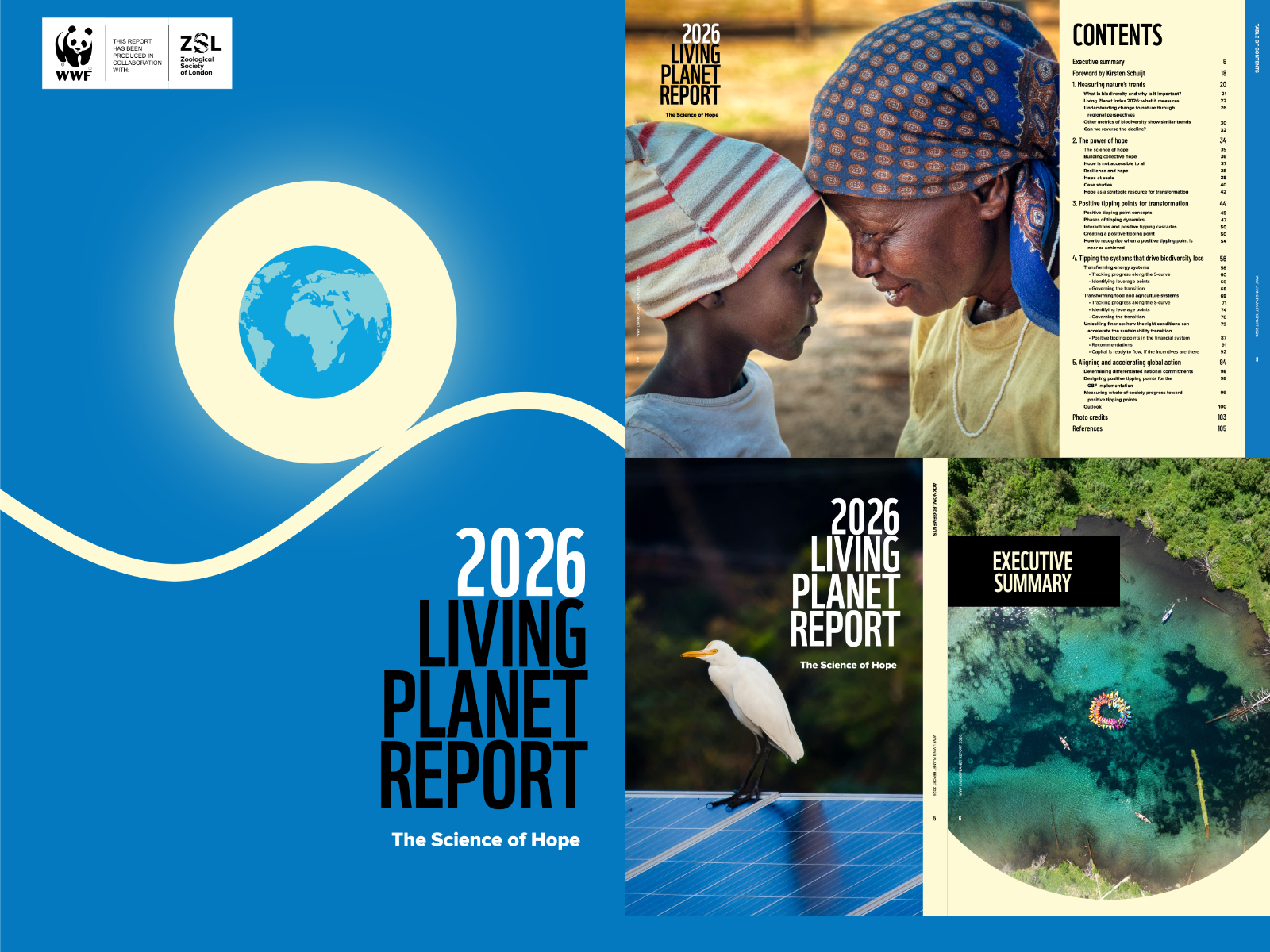
The World Wildlife Fund’s (WFF) latest Living Planet Report was recently released. Now in its 16th edition, it is a comprehensive study of trends in global biodiversity and the health of the planet.
The report is based on the Living Planet Index (LPI), which tracks almost 35,803 population trends of 5,790 species from 1970 to 2022.
The 2026 Living Planet Report is a powerful reminder that while wildlife and the natural world we depend on face unprecedented challenges, nature’s remarkable capacity to recover gives us reason for hope.

Key findings from WWF’s Living Planet Report 2026:
The report reveals a 73% decline in the average size of monitored wildlife populations since 1970, with the greatest losses occurring in freshwater ecosystems. Habitat loss, climate change, pollution and overexploitation continue to put immense pressure on wildlife and the natural world we all depend on. In Australia, steep falls in gentoo penguin numbers on Macquarie Island, and lemuroid ringtail possums and green ringtail possums in the Wet Tropics, contributed to that global decline statistic.
Yet nature’s capacity to recover remains extraordinary. Half of the wildlife populations monitored are stable or increasing, and conservation successes for species like tigers, green turtles, bluefin tuna and southern African elephants show that when we take action, nature responds.
These successes tell us that to create lasting change, we must transform the systems driving nature loss, particularly the way we produce food, generate energy and invest capital. Encouragingly, positive shifts are already underway, demonstrating that change is possible when people, communities, businesses and governments work together.
We have the knowledge, the solutions and the opportunity to turn the tide for nature. If we act now and at the scale needed, we can help create a world where wildlife, people and the places we love can thrive together for generations to come.
You can download the full report here: https://wwf.org.au/hubfs/2026_LPR_Full%20Report.9.23.26.pdf
As always I encourage you to check out more of their amazing work on their website and consider supporting their work. https://wwf.org.au/
“WWF-Australia’s mission is to restore and regenerate our Sky, Country and Saltwater. With the knowledge and traditions of First Peoples and local communities, we can create change on a global scale for climate, nature and people.:


Leave a Reply